What is blockchain technology?
A blockchain is a decentralized ledger of all transactions across a peer-to-peer network. Using this technology, participants can confirm transactions without a need for a central clearing authority. Potential applications can include fund transfers, settling trades, voting, and many other issues.
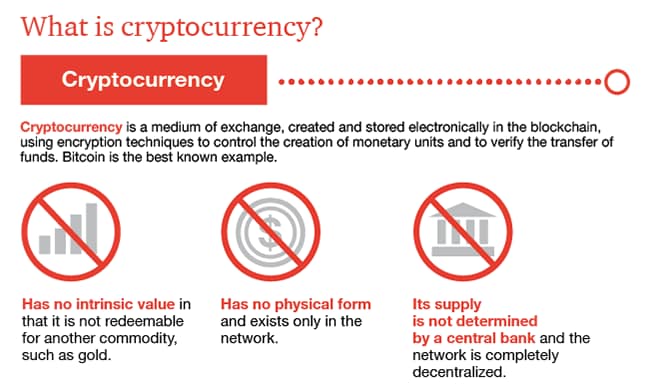
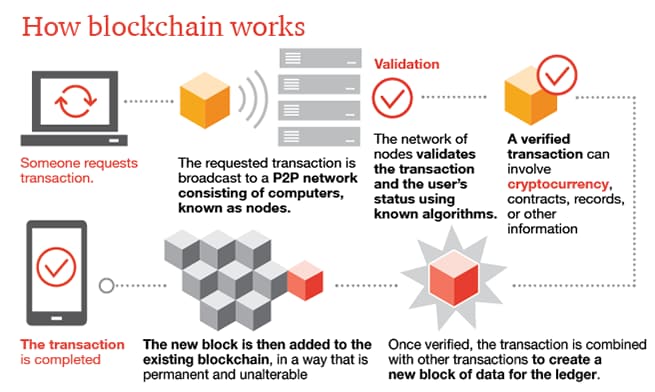
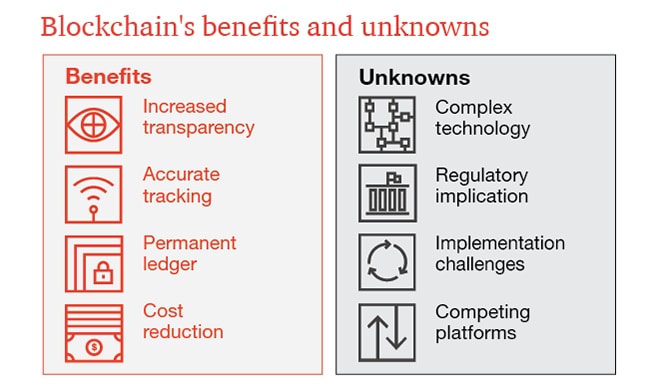
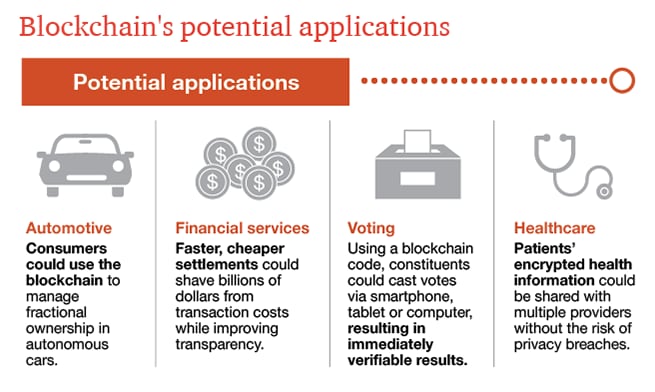
Blockchain also has potential applications far beyond bitcoin and cryptocurrency.
From a business perspective, it’s helpful to think of blockchain technology as a type of next-generation business process improvement software. Collaborative technology, such as blockchain, promises the ability to improve the business processes that occur between companies, radically lowering the “cost of trust.” For this reason, it may offer significantly higher returns for each investment dollar spent than most traditional internal investments.
Financial institutions are exploring how they could also use blockchain technology to upend everything from clearing and settlement to insurance. These articles will help you understand these changes—and what you should do about them.
For an overview of cryptocurrency, start with Money is no object from 2015. We explore the early days of bitcoin and provide survey data on consumer familiarity, usage, and more. We also look at how market participants, such as investors, technology providers, and financial institutions, will be affected as the market matures.
For a deeper dive into cryptocurrencies, we recommend that you read the following:
● Carving up crypto provides an overview of how regulators are thinking about cryptocurrency in financial services, both in the United States and abroad.
● In Cryptocurrencies: Time to consider plan B, we should explore possible avenues for accounting treatment on cryptocurrencies.
● For board members, Ten questions every board should ask about cryptocurrencies suggests questions to consider when engaging in a conversation about the strategic potential of cryptocurrencies.


Comments
Post a Comment